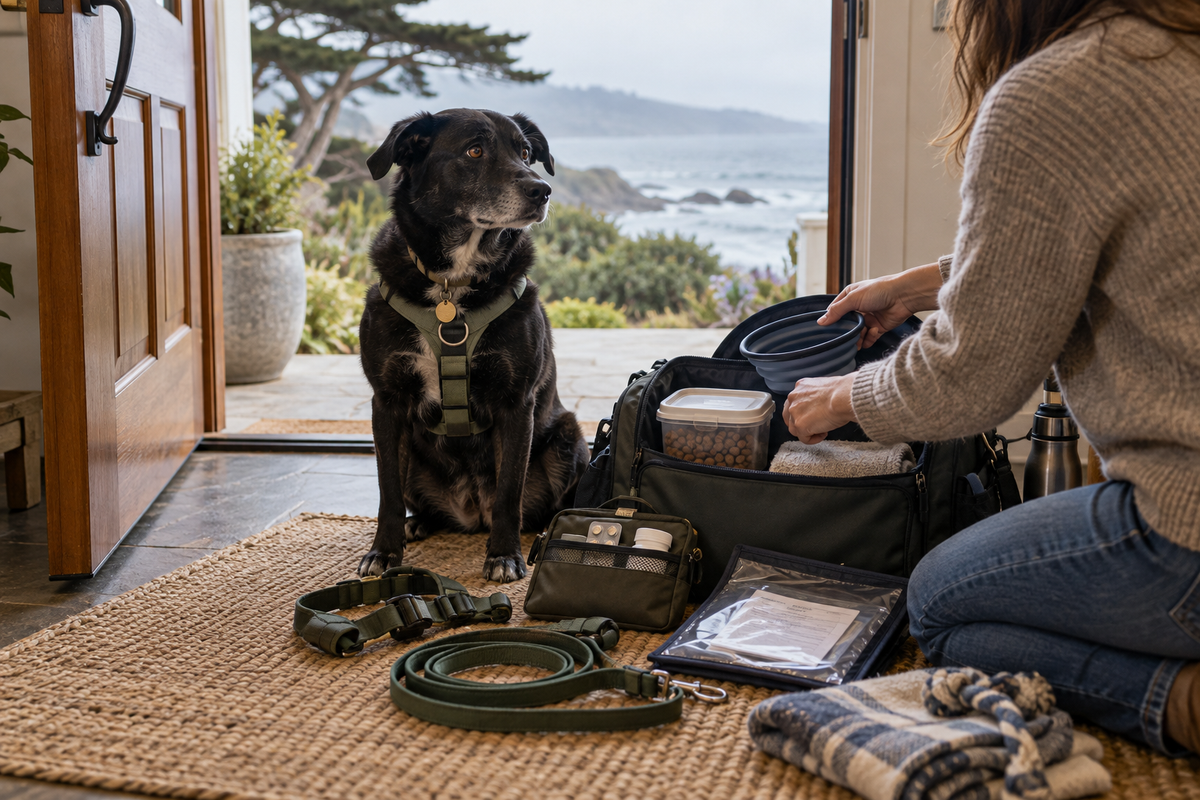
California’s new El Niño state of emergency is a preparedness action—not an evacuation order and not proof that a storm is arriving today. For dog households, the useful response is to use the lead time: register for local alerts, know your evacuation zone, confirm where you can go with your dog, and make the dog’s kit easy to grab. Follow local officials for actual warnings and orders.
On September 21, California proclaimed a state of emergency to help agencies prepare for a strong 2026–27 El Niño and the severe weather, flooding, coastal flooding, erosion, and debris-flow risks it may bring. The National Weather Service also cautions that El Niño is not a single storm and that no two events unfold exactly alike.
That distinction matters. Preparedness should make a household calmer and faster when a real alert arrives—not turn every forecast into a crisis.
What does the state of emergency mean for dog owners?
The statewide declaration lets California coordinate resources and readiness before winter impacts intensify. It does not replace local instructions. An evacuation warning, evacuation order, shelter-in-place direction, road closure, or coastal restriction will still come from the appropriate local authority for the place and hazard involved.
In Monterey County, an evacuation warning means be prepared to leave. That is the window to gather family members, pets, and supplies—and to leave early if mobility, transportation, a fearful dog, or multiple animals will slow you down. An evacuation order means leave now.
Before winter, register for Alert Monterey County, save your zone, and learn the alert system used where you live and where you regularly travel. A general news alert is not a substitute for the official message tied to your location.
Build the plan before you build the bag
A packed tote helps only if you know where you are going. Ready.gov recommends identifying a safe destination that accepts pets, because not every public shelter or hotel does. Choose more than one option and more than one route. Add a backup person who can reach or evacuate your dog if you are away from home.
For Monterey County residents, the county’s Animal Ready guidance identifies SPCA Monterey County as the lead animal-rescue agency during a disaster. Save the current contact information before an emergency, but do not assume rescue access will be immediate or possible in every incident. Evacuating with your dog when instructed remains the safest plan.
Your dog’s grab-and-go kit should be light enough to carry and familiar enough to use. Include:
- several days of food and water in sealed containers;
- regular medications and copies of prescriptions, stored as directed;
- vaccination and veterinary records in a waterproof sleeve or secure digital copy;
- a secure collar or harness, leash, current ID tag, and a recent photo;
- a carrier or crate your dog can enter safely;
- waste bags, a bowl, bedding, and one familiar comfort item.
Ask your veterinarian about refill timing rather than waiting until a storm is in the forecast. If your dog is older, has mobility limits, takes daily medication, or becomes distressed in a carrier, practice the physical parts of evacuation now. Keep any sling, ramp, towel, or mobility aid beside the kit. The Salt Hound Senior Dog Center can help you think through comfort and mobility without treating change as “just aging.”
Make identification work after separation
A microchip is useful only when its registration points to current contact information. Confirm the chip number, update your phone and address, and add an out-of-area emergency contact when the registry permits it. Keep clear recent photos that show your dog’s face, body, markings, collar, and size.
If a dog goes missing during an emergency, speed and verified local contacts matter. Salt Hound’s Lost Dog Emergency guide organizes the first steps, while the Dog Resource Center keeps the wider support system in one place.
Know which instruction you are following
Winter weather can produce several different decisions. A flood warning may call for evacuation. A hazardous-material incident may require sheltering indoors. A marine advisory can make boating unsafe without closing a beach. A park closure controls access to a specific place. Follow the exact agency and exact instruction rather than treating every alert the same way.
If your dog is in medical distress, do not wait for a grant, shelter program, or weather update. Contact an emergency veterinarian. Salt Hound’s Dog Help Desk provides an emergency-first starting point, and the California Dog Hazard Center covers the coastal risks that can change a plan.
The calmest time to prepare is before the rain
You do not need to predict the winter. You need a system that still works when roads, power, weather, or nerves stop cooperating.
Put the leash with the kit. Teach the carrier before it is urgent. Know the zone. Choose the backup person. Save the official alert page. Then return to ordinary life with your dog.
Sources and conditions checked September 26, 2026. Primary references: California Governor’s Office, National Weather Service El Niño guidance, Ready.gov pet preparedness, and Monterey County emergency definitions.