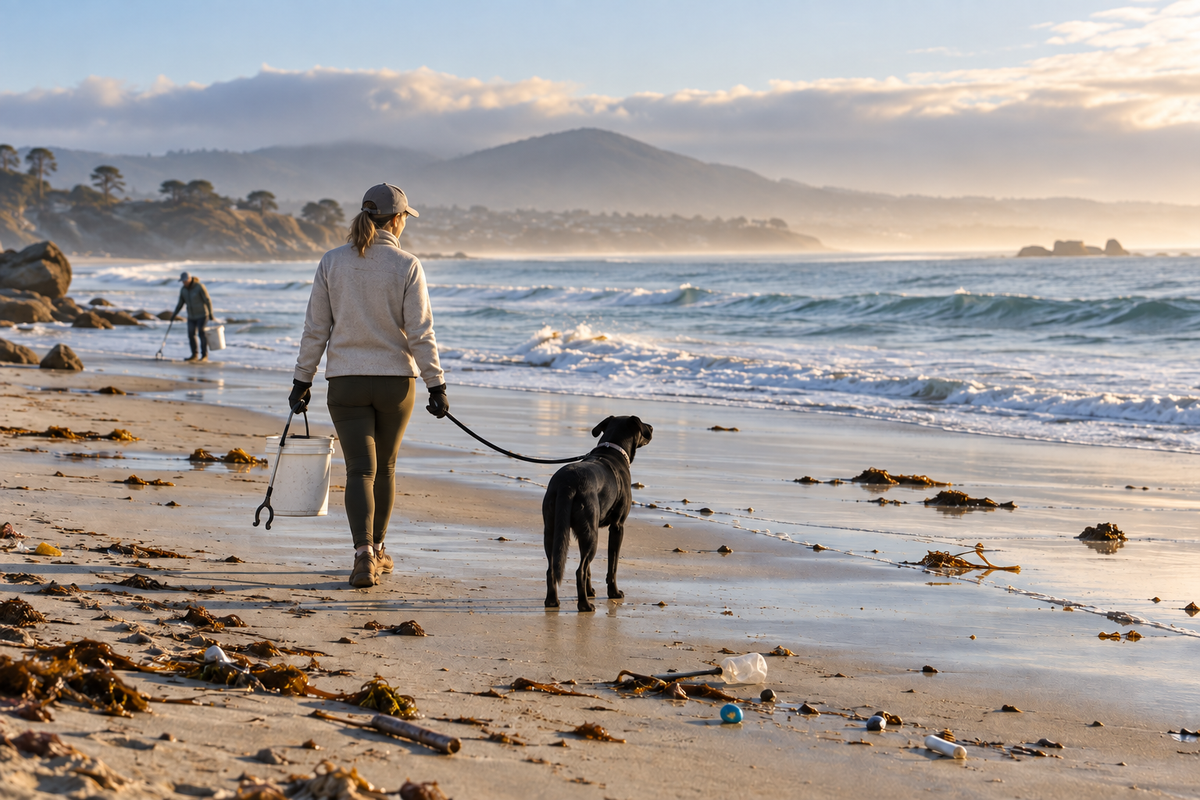
Sometimes—but the safest answer depends on the exact beach, the cleanup rules and whether your dog can stay out of the work zone.
Short answer: Bring your dog only when the specific cleanup site is on a dog-friendly beach and both the organizer and land manager allow it. Around Monterey Bay, Save Our Shores says dogs may join cleanups at dog-friendly beaches if they remain leashed, but nearby destinations do not all share the same rule. If your dog scavenges, dislikes crowds, tires easily or cannot comfortably avoid sharp debris, leaving them home is the kinder plan.
California Coastal Cleanup Day is Saturday, September 19, from 9 a.m. to noon. California State Parks expects more than 50,000 volunteers at more than 700 sites statewide, while Save Our Shores coordinates dozens of locations around Monterey Bay. That scale is exactly why “Are dogs allowed?” has no single statewide answer.
The rule starts with the beach, not the event
A cleanup registration does not override the normal rules of the park, beach or wildlife area. Start with the official statewide cleanup map, open the exact site listing and then check the land manager’s current dog policy. If either source is unclear, choose another site or volunteer without your dog.
The differences can be striking even along the same stretch of coast. Asilomar State Beach allows dogs on its beach and trails when leashed. At Natural Bridges State Beach, dogs are limited to the parking and picnic areas and are not allowed on the beach or trails. Farther north, the National Park Service’s Drakes Beach cleanup at Point Reyes specifically prohibits pets.
“Coastal Cleanup Day” describes the shared effort. It does not create a shared dog-access rule.
Is bringing your dog actually a good idea?
Permission is only the first test. A cleanup is a work zone, not an ordinary beach walk.
Point Reyes’ volunteer guidance warns that beach debris can include nails, broken glass and hypodermic needles, and it requires gloves. Not every cleanup site will contain those objects, but the warning makes the risk clear: a dog should never be allowed to nose through or mouth unknown debris while volunteers are sorting it.
Think about the individual dog. A steady adult dog that ignores litter, stays comfortable around strangers and can settle beside one handler may do well at an approved site. A puppy, persistent scavenger, reactive dog or dog unsettled by grabbers, buckets and groups of people is likely better at home.
For an older dog, factor in footing, distance, noise, temperature, mobility and recovery time. A short familiar walk later may be more comfortable than standing on uneven sand during a busy cleanup. If you are unsure what activity is appropriate for a dog with a health or mobility condition, ask your veterinarian rather than treating reduced stamina as “just aging.” The California Dog Hazard Center can also help you plan for coast-specific risks before leaving home.
If your dog comes, give them one job
The dog’s job is not to help find trash. It is to stay safely with you.
Use a secure leash and assign one adult to handle the dog while another collects debris. Bring water and a bowl, keep food rewards sealed away from litter and do not tie the leash to a bucket or cleanup station. Watch for crowding, rough surf, wildlife and stress signals. If the dog cannot stay clear of the work area, leave early; finishing a particular stretch of beach is not more important than safety.
Closed-toe shoes, gloves and reusable cleanup supplies are recommended for people. Save Our Shores encourages volunteers to register, complete the waiver and check their site page for any location-specific instructions. The same preparation belongs in every coastal outing: consult the California Dog Guide, find an appropriate destination with the California Dog Adventure Finder, and keep the Dog Resource Center handy for practical help.
A good cleanup plan can include leaving the dog home
Coastal stewardship is not measured by whether your dog appears in the volunteer photo. It is measured by showing up prepared, respecting the site and leaving the shoreline safer than you found it.
For some teams, that means a leashed dog beside one attentive handler at an approved beach. For others, it means giving the dog a quiet morning at home and bringing back a cleaner coast for the next walk.
Information and site rules checked September 18, 2026. Cleanup details and access rules can change; confirm the exact site with its organizer and land manager before traveling.