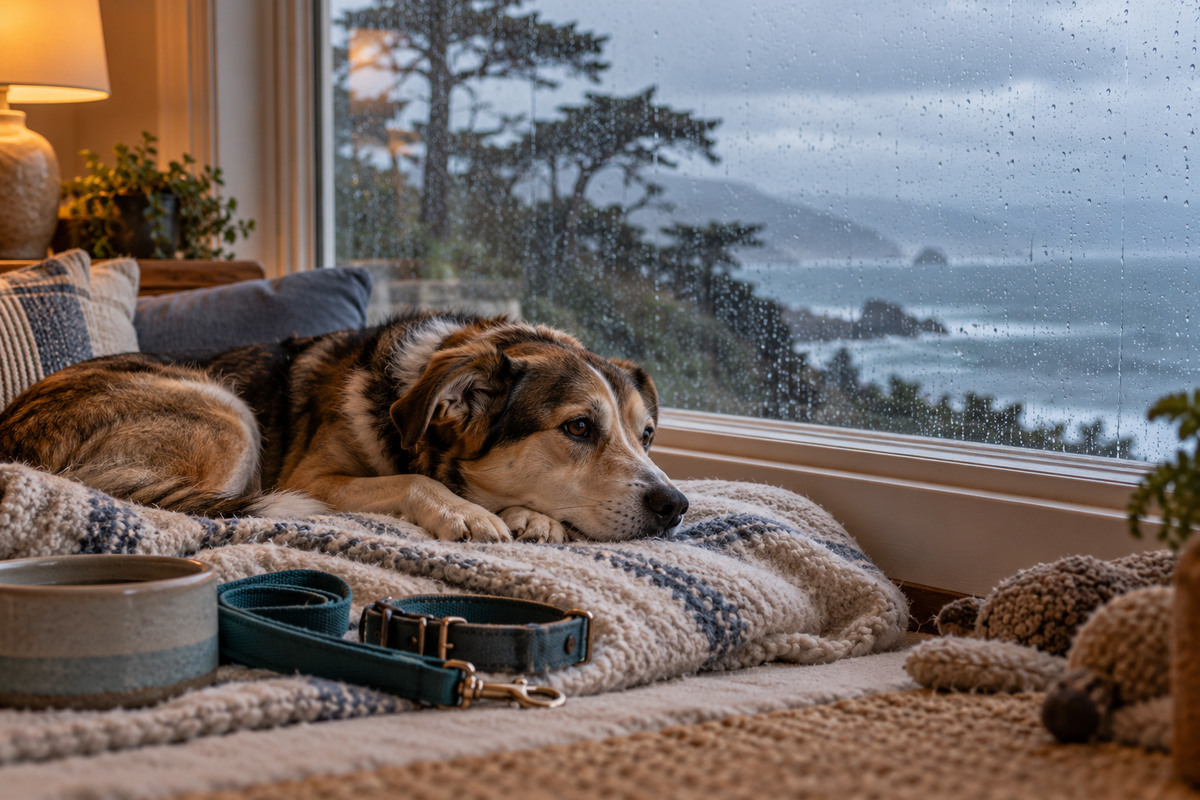
If your dog is afraid of thunder, bring them indoors before the storm arrives, secure doors and gates, and prepare a quiet place where they can choose to hide or rest. If thunder begins, postpone the walk; the National Weather Service says that hearing thunder means you are close enough to be struck by lightning. Stay calm, do not punish fearful behavior, and call your veterinarian before future storms if the fear is severe, escalating, or has caused injury.
This is a preparation story, not a prediction that every Central Coast neighborhood will hear thunder. At 4:33 a.m. PDT on October 20, the National Weather Service forecast showers reaching the Central Coast Wednesday morning and said the chance of thunderstorms remained below 20%, with the greatest potential along the Big Sur coastline Wednesday afternoon. The same forecast noted uncertainty in the timing.
Is thunder actually forecast for Monterey Bay?
Rain is the more likely part of the forecast. The weather office expects shower activity to increase Wednesday, with the Central Coast carrying the higher chance of wetting rain. Thunderstorms are possible but not certain, and conditions can change by location.
Before taking your dog to a beach, trail, open field, or exposed overlook, check the current National Weather Service Monterey area forecast discussion. If you hear thunder while outside, do not wait to see lightning. Go into a substantial building or hard-topped vehicle. There is no safe place outdoors during a thunderstorm.
For other weather and coastal risks that can change a plan, use Salt Hound’s California Dog Hazard Center.
What should you do before the first rumble?
Set up the boring details while your dog is still calm. Choose an interior room, bedroom, covered crate, or familiar bed that your dog already uses willingly. Close windows and blinds, reduce outside noise with a fan, television, or quiet music, and let the dog move into the space rather than forcing them there.
UC Davis veterinary guidance for loud-noise fear recommends supervision, an indoor hiding place, and reducing outside sights and sounds. A safe place should feel predictable, not like punishment.
- Bring your dog inside before the rain band or thunder reaches you.
- Check that doors, screens, gates, collar or harness, and ID tag are secure.
- Keep a leash beside the door for necessary bathroom trips.
- Place water, bedding, and one familiar comfort item in the quiet area.
- Save a recent photo and confirm that microchip contact information is current.
If your dog does slip away, start with the Lost Dog Emergency Plan rather than waiting for them to return on their own.
How can you tell that your dog is struggling?
Fear is not always loud. UC Davis lists signs such as trembling, hiding, a tucked tail, low body posture, whining, and attempts to escape. Other research from the veterinary school notes subtler signs including panting, lip licking, turning the head away, or becoming stiff.
Give the dog room. Avoid dragging them toward a window, forcing them outside to “get used to it,” or scolding barking, pacing, or hiding. A fearful dog may be trying to create distance from something they cannot understand. Keep children and other animals from crowding the retreat, and use calm, ordinary movement around the home.
For everyday support beyond this weather window, Salt Hound’s Life Together hub covers practical routines and behavior questions without treating fear as disobedience.
When should you call a veterinarian?
Contact your regular veterinarian if storm fear is recurring, getting worse, disrupting your dog’s quality of life, or leading to escape attempts, destructive panic, or injury. Do this before the next storm when possible. A veterinarian can rule out medical contributors, assess the pattern, and discuss an individualized behavior plan. UC Davis notes that medication can help some animals with serious fear or anxiety, but it is not the sole answer and should be considered as part of veterinary care.
Do not give human medication, supplements, or someone else’s prescription, and do not change a prescribed dose on your own. If your dog is injured, collapses, has trouble breathing, or is otherwise in medical distress, contact an emergency veterinarian now. The Dog Help Desk is organized to put urgent care first.
The useful move today
Check the forecast for your exact location, move the evening walk earlier if conditions warrant, and prepare one quiet indoor option before the first rain arrives. The chance of thunder may remain small. The plan is still useful because it removes hurried decisions when weather and nerves change at the same time.
Sources and conditions checked October 20, 2026. Primary references: National Weather Service San Francisco Bay Area/Monterey Area Forecast Discussion, National Weather Service lightning safety, UC Davis School of Veterinary Medicine: Fear in Dogs, and UC Davis Clinical Animal Behavior Service loud-noise guidance.