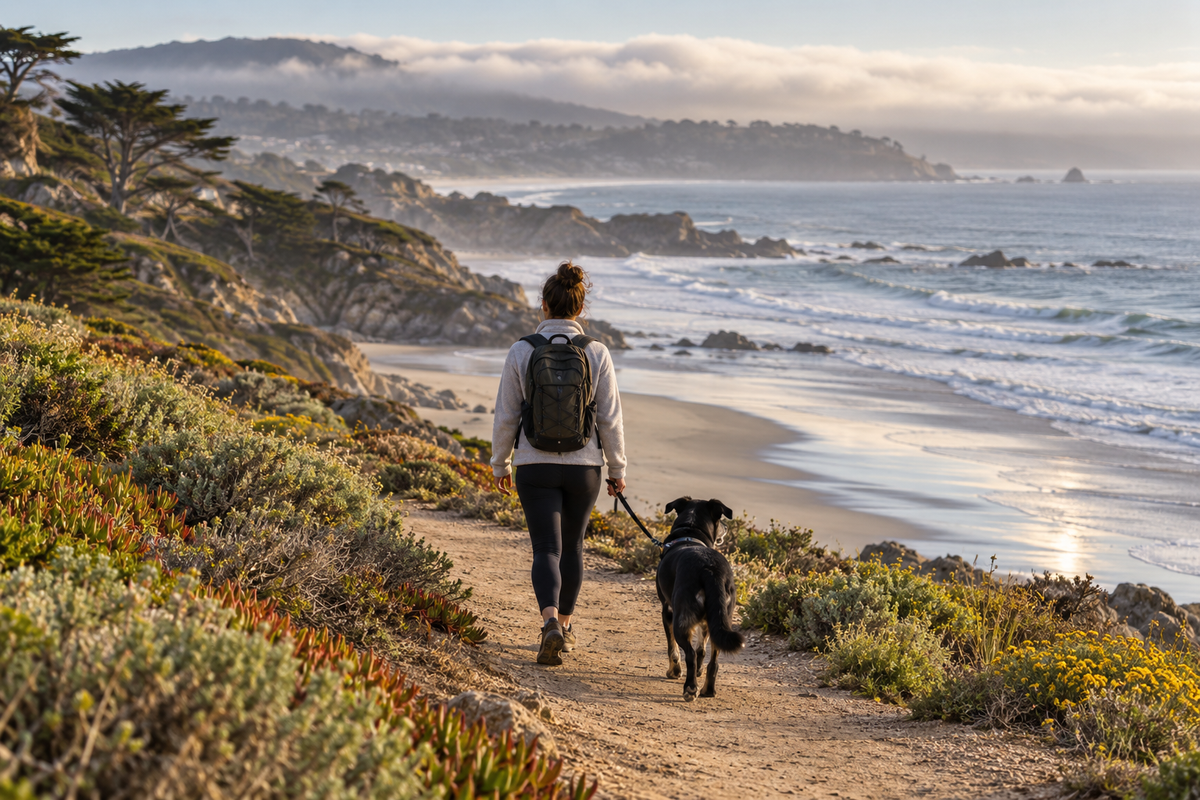
Monterey Bay’s current Coastal Flood Advisory is a reminder that a beach can be open and still be the wrong place for today’s dog walk.
Short answer: You can walk your dog during a Coastal Flood Advisory only if the exact route is open, dry and safely above the affected shoreline. The advisory is not an automatic beach closure, but it means high tide may cover low trails, parking areas and beach approaches, while water can reach farther up the sand than expected. Choose higher ground, keep your dog leashed and turn around before water, barricades or an uncertain exit.
What does a Coastal Flood Advisory actually mean?
The National Weather Service’s current coastal flood statement covers Monterey Bay and other Bay Area shorelines through 5 p.m. Thursday, October 1. It warns that up to 1.2 feet of inundation is possible in vulnerable low-lying places, including coastal parking lots, parks and roads. High tide may also flood coastal trails, cut off access to low beaches and carry water farther up the beach than usual.
That is a different question from a Small Craft Advisory. A marine advisory speaks primarily to conditions on the water. A Coastal Flood Advisory is directly relevant to the place where you park, enter, walk and plan to return.
It also does not mean every shoreline access point is closed. Conditions can vary between an elevated bluff path and a low beach entrance only a short distance apart. The useful question is not simply “Is the beach open?” It is “Will this exact route stay safely passable for the whole walk?”
How should you change the dog walk?
Start with the route, not the dog’s enthusiasm. A familiar beach can change quickly near high tide, especially where rocks, bluffs, stairs or a narrow strip of sand limit the way out.
- Choose a higher, drier alternative. An inland neighborhood loop or elevated legal trail is a better backup than testing a low shoreline path.
- Check the tide and the land manager. Use the NOAA Monterey tide station for local observations and forecasts, then confirm current access or closures with the park, city or beach manager.
- Keep the dog leashed and close. Rising water, waves, wildlife and a narrowing route all reduce the margin for a loose dog.
- Turn around early. Do not wait until water reaches the path behind you. A retreat should remain obvious and dry.
- Respect barricades and closures. They are information, not an invitation to find another way around.
If you are unsure how a coastal warning fits with the rest of the forecast, Salt Hound’s California Dog Hazard Center and California Dog Adventure Finder can help you separate weather, access and route-choice questions.
Why should dogs stay out of floodwater?
Floodwater is not ordinary beach water. The Centers for Disease Control and Prevention warns that floodwater can contain sewage, germs, chemicals and physical debris. Dogs explore with their feet, mouths and noses, so “just a shallow puddle” can create exposure you cannot assess by looking at it.
Do not encourage a dog to drink, wade or retrieve toys in pooled or moving floodwater. If your dog enters contaminated water, prevent licking until you can rinse exposed fur and paws with clean water. Contact a veterinarian promptly if the dog may have swallowed contaminated water, was injured by debris or develops concerning signs. If a dog is struggling to breathe, collapses or has another emergency sign, seek emergency veterinary care now rather than waiting for an advisory to end; Salt Hound’s Dog Help Desk can help organize the next step but does not replace veterinary care.
Does the advisory close every dog-friendly beach?
No. The weather service issues the hazard advisory; the relevant land manager decides access and closures. Dog rules also remain site-specific. California State Parks’ dog-access guidance and its individual park pages are the right starting points for state-managed land, but posted rules at the site control.
That distinction matters around Monterey Bay. A route may permit leashed dogs and still be a poor choice at high tide. Another place may be physically dry but prohibit dogs. “Dog-friendly,” “open” and “safe in today’s conditions” are three separate checks.
What should you check before leaving?
Read the current NWS alert, check the local tide station, confirm the exact entrance and dog rules, and identify a higher backup route before you drive. If the return path could disappear under water, choose the backup now.
A Coastal Flood Advisory does not require panic. It asks for a smaller, wiser plan: stay above the water, keep the exit simple and give the coast more room than usual.
Source note: Coastal-flood guidance, tide resources, floodwater safety and dog-access information were checked September 29, 2026. Conditions and closures can change; follow current National Weather Service and land-manager instructions.