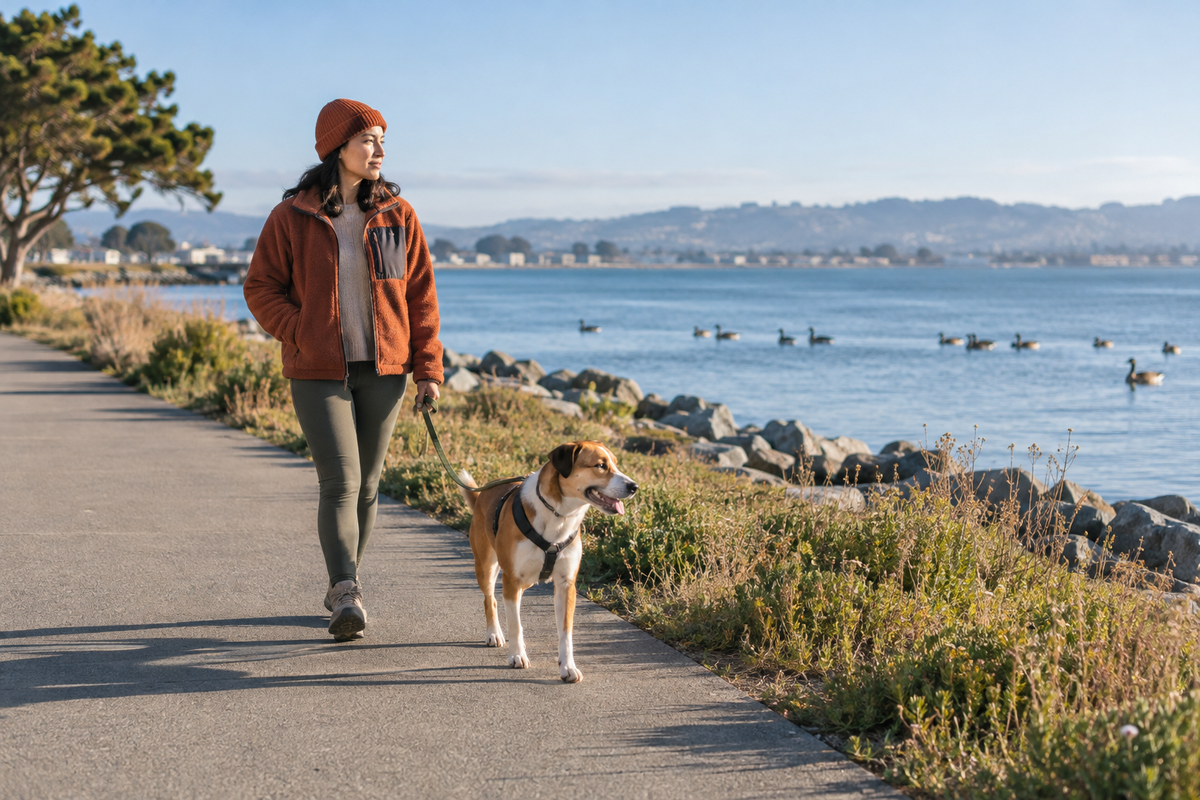
A new East Bay parks notice does not close the shoreline, but it sharpens the case for a short leash, a bird-free route and no beach access.
Yes—but only where dogs are already allowed. At Robert W. Crown Memorial State Beach, dogs are prohibited on the beach and may use only lawn areas and paved pathways on a leash no longer than six feet. After Canada geese collected at the park tested positive for highly pathogenic avian influenza, keep your dog well away from birds, carcasses and droppings, and report sick or dead birds instead of approaching them.
What changed at Crown Beach?
East Bay Regional Park District announced on October 23 that Canada geese collected by Alameda County Vector Control on October 8 and 12 tested positive for highly pathogenic avian influenza, commonly called bird flu. The district says infected birds could be found elsewhere in the East Bay as fall and winter cases increase.
The notice does not announce a closure of Crown Beach. It says the risk to the general public is low, while warning that infection can occur after close or prolonged exposure to infected birds or contaminated environments. That is a reason for calm distance—not a reason to handle a bird, let a curious dog investigate, or assume an animal that looks still is safe to approach.
Where can dogs walk at Crown Beach?
The park’s standing dog rule is unambiguous: dogs are not permitted on the beach. They are allowed on lawn areas and paved pathways, where they must remain under control on a leash no longer than six feet. The Elsie Roemer Bird Sanctuary is also currently closed to entry for restoration work.
For a dog walk, the simplest plan is the safest one: stay on the paved route, keep the leash short enough to prevent a sudden lunge or sniff, and turn around before you reach a cluster of birds. The bird-flu notice does not create new dog access. It makes following the existing boundary especially important.
For other current coastal rules and route planning, use Salt Hound’s California Dog Guide and California Dog Hazard Center.
How do you avoid exposure without turning the walk into a panic?
Give geese, shorebirds and other wildlife generous space. Do not allow your dog to nose bird droppings, feathers or a carcass. If birds are feeding or resting across the path, choose another stretch rather than threading through them. The CDC advises pet owners to prevent dogs and other pets from interacting with wild birds and from contacting potentially contaminated surfaces or environments.
If you find a dead bird, East Bay Regional Park District says to remain at least 50 feet away. Note the exact location without moving closer and, if it can be done safely from a distance, record a photo or map location. In Alameda County, report the bird to Alameda County Vector Control at 510-567-6800. Contra Costa County visitors can call 925-685-9301.
What should you do if your dog contacts a sick or dead bird?
Move your dog away and prevent any additional contact. Do not pick up the bird or clean contaminated material with bare hands. Call your veterinarian and explain what happened, including the location and whether the dog touched or ate any part of the bird.
The CDC advises seeking veterinary care when a pet has had relevant exposure and shows signs of illness. Those signs can include fever, unusual fatigue, low appetite, inflamed eyes or discharge, breathing difficulty, or neurologic changes. That list is not a home diagnostic tool; a veterinarian should decide what evaluation is appropriate. For urgent changes, use the Dog Help Desk to organize the situation, then contact veterinary care directly.
What is the practical takeaway?
Crown Beach can still be part of a dog’s day, but not the sandy beach and not a close pass by wildlife. Choose the paved path or lawn, use a six-foot-or-shorter leash, keep birds and droppings out of reach, and report concerning wildlife from a distance. Check the park notice before traveling because monitoring is ongoing and conditions can change.
Information reviewed October 26, 2026. For broader help with changing local hazards, emergency planning and verified resources, visit the Salt Hound Dog Resource Center.