Peace of Mind Dog Rescue is holding a volunteer orientation and foster overview on October 28. Here is what the organization says foster homes provide—and what support, costs and senior-dog preparation prospective volunteers should understand before applying.
Direct answer: To foster a senior dog with Peace of Mind Dog Rescue (POMDR), start with its volunteer application and orientation. Expect to provide a safe temporary home, daily care, food, observation and communication while POMDR supplies approved medical care, equipment as available, training and mentor support. The right setup depends on the individual dog; POMDR—not appearance or age alone—determines the dog’s medical, behavior and placement plan.
Freshness: Event details and live foster information were verified on October 28, 2026. Foster availability can change quickly.
Why is this timely in Monterey Bay?
POMDR’s online orientation and foster overview is scheduled for Wednesday, October 28, from 5:30 to 7:30 p.m. on Zoom. The organization says the session is for people who are new, already involved or simply considering volunteer work. Its live foster-needs page also listed multiple dogs waiting for homes when checked Wednesday, including dogs expected to enter the program later this week.
If the orientation has already passed by the time you read this, the practical next step is unchanged: review POMDR’s current foster information and complete the official volunteer application. A name appearing on the live list is not a guarantee that the dog is still available or that a particular home will be the right match.
What does POMDR provide—and what does a foster provide?
POMDR does not house its adoption dogs in a central kennel. The organization says dogs live in foster homes until adoption or, when another move would not be appropriate, remain in a foster home under its lifetime commitment. That makes the foster home part of the care system, not a casual sleepover.
On its current foster-needs page, POMDR says it covers medical expenses and provides items such as a crate, bed, collar, harness, leash, identification tag, bowls, toys and flea prevention. Its volunteer overview adds an important caveat: donated food and supplies may be available, but fosters may need to buy high-quality food. POMDR also describes a foster manual, training, an emergency contact, ongoing mentor support and help troubleshooting behavior.
The foster supplies the home, time, food and reliable observations that help the rescue understand the dog. Before accepting a placement, ask who handles appointments and transport, what costs require advance approval, how long the expected commitment may be, whether the dog can be left alone, and what the emergency contact process is. In an urgent situation, contact the rescue and veterinary provider immediately and follow their emergency instructions.
How should a home be prepared for a senior foster dog?
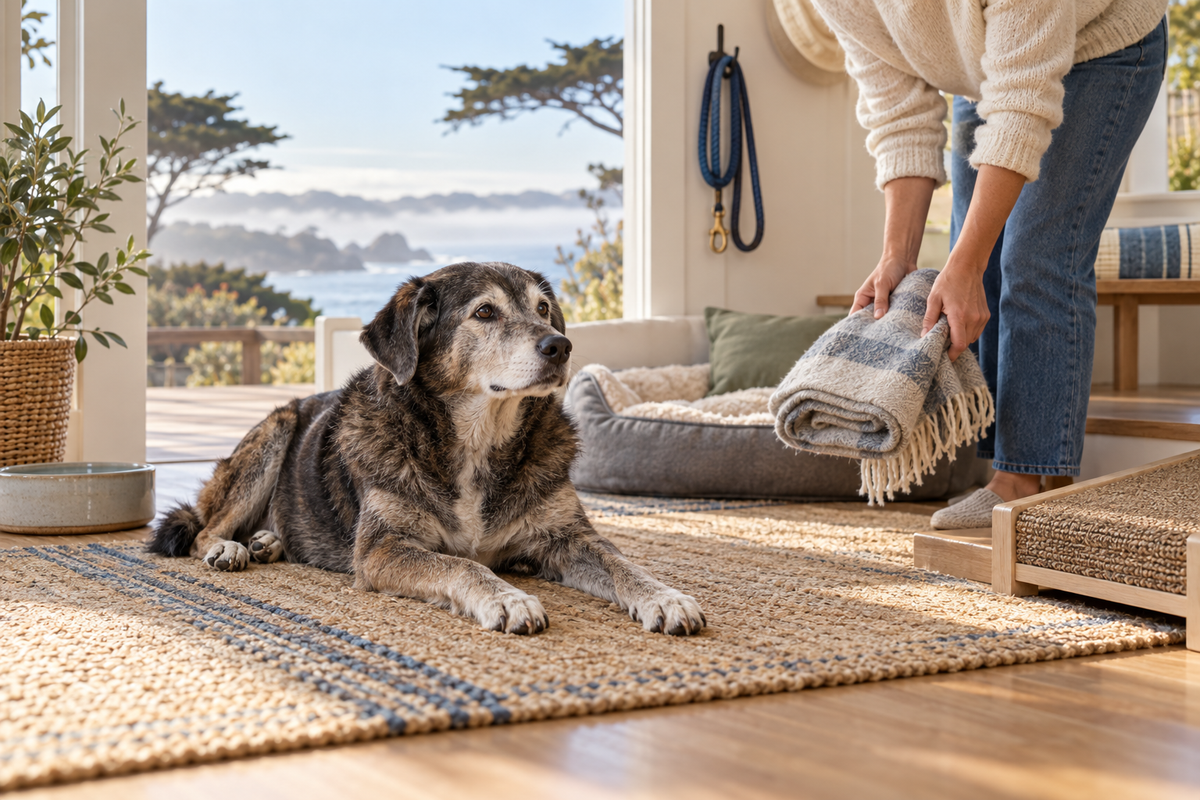
Prepare for the dog you are assigned, not a generic idea of an “old dog.” Start with a quiet resting area, easy access to water, blocked stairs or pools when needed, and secure doors and gates. Nonslip runners, a supportive bed and an appropriately fitted harness can help a dog whose mobility, sight or hearing is limited. AAHA’s senior-care guidance similarly recommends environmental changes such as rugs, ramps, accessible bedding and hazard control when a veterinary team considers them appropriate.
Keep the rescue’s feeding and medication instructions together and visible to everyone in the household. Feed the complete diet and portions POMDR or its veterinary team specifies; treats are extras, not a replacement for balanced food. Do not start supplements, change medication or improvise a therapeutic diet. Report appetite, water intake, elimination, sleep, movement and behavior changes instead of diagnosing them.
Exercise and enrichment should be adapted to the assigned dog. That may mean short, easy outings, sniffing, gentle food puzzles or simply calm time near the household—not a fixed mileage goal. Ask what prevention, grooming and follow-up care are due, and what changes should trigger a veterinary call. For more noncommercial planning, Salt Hound’s Senior Dog Center gathers comfort, mobility and care questions in one place.
What should you ask before saying yes?
- What is known—and not yet known—about this dog’s medical and behavior needs?
- Can the dog live with my household’s people, dogs, cats, stairs and schedule?
- Who approves food, veterinary care, medication, training and transport?
- What support is available after hours, and who is my foster mentor?
- What happens if the placement is not safe or sustainable?
Those questions protect both the dog and the foster family. They also help POMDR make a better match. If fostering is not workable now, there are other ways to support adoption: follow current dogs through Salt Hound’s Still Waiting rescue series, use the before-you-adopt guide, or prepare for the first days with Bringing Them Home.
How do you get started?
Read POMDR’s official fostering overview, check the live foster-needs list, and use the volunteer application and orientation information. Because needs change, rely on POMDR for availability, health, behavior requirements and placement decisions.