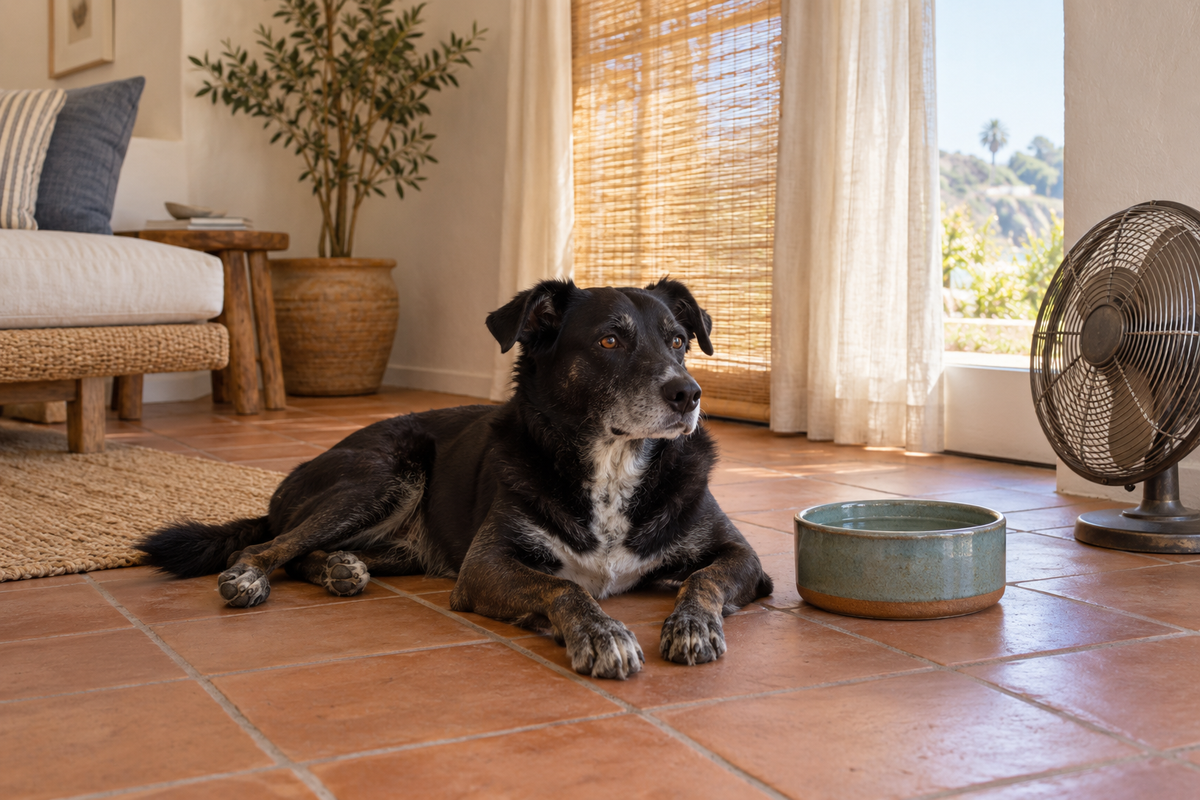
Today’s Heat Advisory reaches places that often expect the ocean to do the cooling. Here is a practical plan for keeping a dog safer indoors when your home does not have air conditioning.
Short answer: Start before the room feels hot: block direct sun, move your dog to the coolest shaded space, provide fresh water in more than one place, reduce activity and use a fan or pet-safe cooling tool as support. A fan is not proof that the room is safe. If the home keeps heating up—especially with a senior, short-nosed or medically vulnerable dog—relocate early to a confirmed air-conditioned place that accepts dogs.
Why does coastal heat matter today?
The National Weather Service Heat Advisory includes Northern Monterey Bay, the Northern Salinas and Hollister valleys, Carmel Valley, Southern Monterey Bay and the Big Sur coast through 10 p.m. Sunday, October 4. Forecast highs in those coastal zones are in the low 80s to low 90s, with mild overnight temperatures limiting relief.
That matters because many coastal homes were built around cool evenings and marine air, not sustained indoor cooling. The American Animal Hospital Association warns that pets can overheat in a home, garage, sunroom or enclosed porch when the space becomes too hot. “Indoors” is only protective if the indoor space is actually cooler.
How do you build a cooler room without AC?
Work on the room before working on the dog. Close blinds or curtains on sun-facing windows early. Choose the lowest, shadiest room you have, especially one with tile or another cool surface. When outdoor air is cooler than indoor air and air quality is acceptable, use cross-ventilation; once the outside becomes hotter, close the windows and keep direct sun out. Avoid running the oven or other heat-producing appliances during the hottest hours.
Then make that room easy for your dog to use:
- Put fresh water in more than one easy-to-reach location.
- Move bedding off a heat-trapping sunny spot and leave access to a cooler floor.
- Use a fan, cooling mat or damp towel as a comfort aid, not as a guarantee.
- Replace vigorous play with quiet sniffing, food puzzles or rest.
- Keep bathroom trips short and avoid hot pavement.
AAHA’s heatstroke-prevention guidance supports ventilation, shade, water and safely used cooling tools, while Ready.gov cautions that a fan should not be the only cooling plan during dangerous heat. Do not use ice baths or extremely cold water.
Which dogs need an earlier backup plan?
All dogs can overheat, but the margin is smaller for short-nosed dogs, overweight dogs, puppies, senior dogs and dogs with heart, lung or other medical problems. Thick- or dark-coated dogs can also be more vulnerable. If your dog is older, review the Senior Dog Center and ask your veterinarian in advance whether the dog’s health or medication changes the heat plan.
Do not wait for obvious distress before deciding where else you could go. A friend or relative with air conditioning may be the simplest option. A boarding or daycare provider may work only if it knows the dog and can safely meet medical and behavior needs. Public cooling locations vary in their animal policies, so confirm dog access before leaving. Transport the dog in a cooled vehicle and never leave the dog unattended in a parked car.
When is this a veterinary emergency?
Heavy panting, drooling, shade-seeking, whining or reluctance to play can be early overheating signs. Persistent excessive panting or drooling, difficulty breathing, vomiting, diarrhea, weakness, stumbling, confusion, seizures or collapse require immediate veterinary attention. Cornell’s veterinary guidance treats heatstroke as a life-threatening emergency.
Move the dog to a cooler area, contact a veterinarian or emergency hospital immediately and follow that team’s instructions while preparing to travel. If the dog is alert and able to drink, AAHA advises offering small amounts of cool—not cold—water. Do not delay care to keep trying home cooling.
What should you do before the hottest hour?
Check the exact forecast for your address, prepare the coolest room now and decide where the dog can go if the room stops being safe. The California Dog Hazard Center helps put heat in the wider coastal context; the Dog Help Desk can organize non-emergency concerns; and Life Together offers everyday care planning.
The goal is not to create a perfect climate-controlled house with improvised tricks. It is to notice early when your home is no longer doing enough—and change the plan before your dog is in trouble.
Sources checked October 4, 2026: National Weather Service San Francisco Bay Area/Monterey, Cornell University College of Veterinary Medicine, American Animal Hospital Association, UC Davis School of Veterinary Medicine and Ready.gov. This article is educational and does not replace veterinary care.