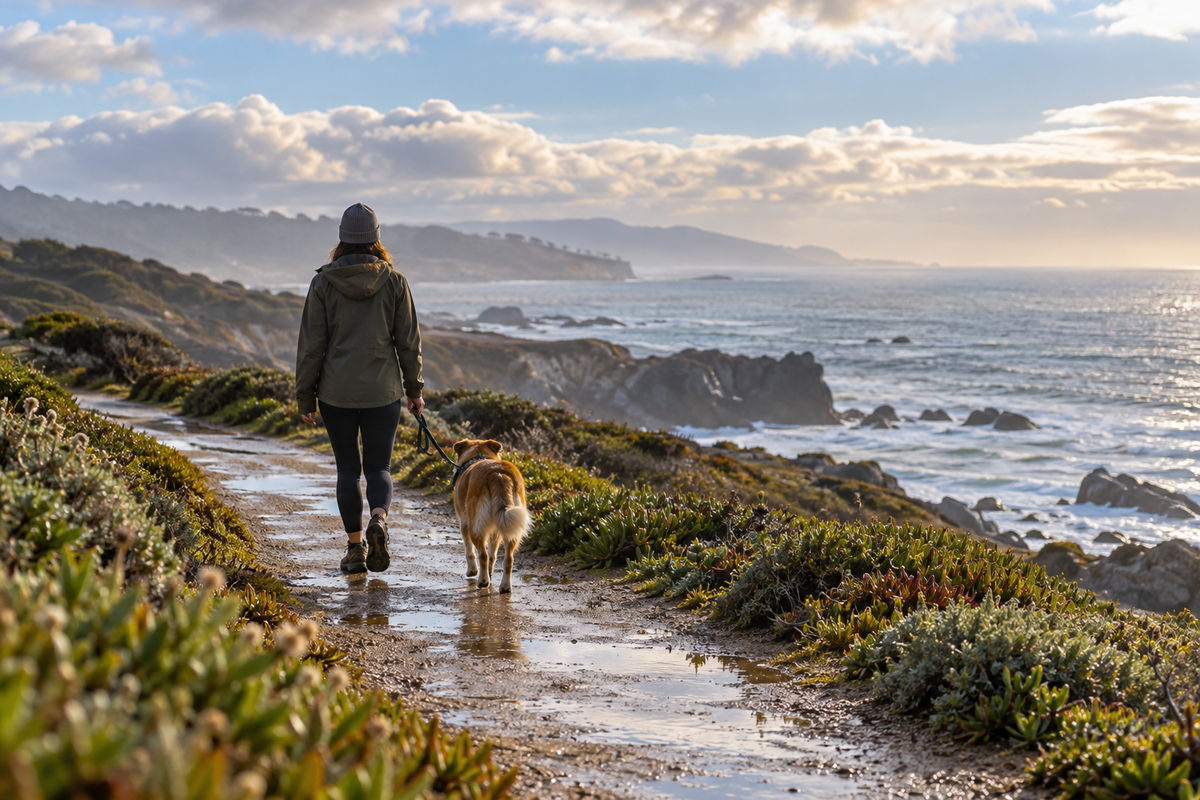
No—if a rain advisory, bacterial posting or closure is active, keep your dog out of Monterey Bay water. The National Weather Service expects light rain to reach the Central Coast Tuesday evening, October 20, with showers continuing through Thursday. Rain runoff can carry bacteria and other pollution into the ocean, so check current county or state beach information before your dog swims, wades or drinks from water near the shoreline.
The first gray day after a dry spell can make the coast look quieter and more inviting. Water quality can tell a different story. Monterey County explains that rainwater can wash motor oil, pet waste, pesticides, trash and other material through untreated storm drains toward the beach. Bacterial levels often rise after storms even when the water looks and smells normal.
How long should dogs stay out of the water after rain?
Follow the local advisory first. California’s State Water Resources Control Board says many coastal agencies advise people to stay out of the water during a storm and for up to three days afterward because of runoff-related contamination. That is a useful planning window, not permission to enter the water automatically on day four. A posted warning or closure remains the deciding signal.
These advisories are written for public water contact, not as individualized veterinary instructions. Still, the dog-first choice is straightforward: if officials are warning people not to swim, do not let a dog swim, wade or drink there either. Dogs do not read signs, and a quick splash can include swallowing water or licking it from their coat later.
Where should you check before a Monterey Bay beach walk?
Start with the Monterey County beach water-quality page. The county also directs readers to its Beach Condition Hotline at 831-755-4599 for the latest bacteriological postings or closures. For statewide information, use the California Water Board’s BeachWatch advisory search.
At the beach, obey every posted sign and give storm-drain outlets, creek mouths and flowing runoff a wide berth. A “posting” warns that water contact may cause illness; it does not necessarily close the sand. A “closure” is different: the affected area is off limits until officials determine it is safe. A dry-land walk may still be possible where dogs are legally permitted, but water access should not be part of the plan.
What is a safer plan for the next few days?
Choose a leashed walk on a legal coastal path or another route that keeps your dog away from surf, creek crossings, puddles and runoff. Bring fresh drinking water so ocean water is never the convenient option. Pick up dog waste and carry it to a bin; the U.S. Environmental Protection Agency notes that stormwater can move pet waste into waterways, adding bacteria and nutrients that can harm people, animals and the coastal ecosystem.
Salt Hound’s California Dog Hazard Center is the primary hub for changing coastal conditions. Use the California Dog Guide to find verified local help, the Dog Resource Center for the wider support system, and the Dog Help Desk if something about your dog changes and you need help deciding what to do next.
What if your dog gets into runoff or beach water?
Move your dog away from the water and prevent more drinking or licking when you safely can. If you are worried about the exposure or your dog seems unwell, contact your veterinarian for advice; urgent or severe distress belongs with an emergency veterinary hospital. Do not use a beach article to diagnose the problem or wait on a changing web advisory when your dog needs care.
The coast does not disappear when the rain arrives. For a few days, the better ritual is the simpler one: leash on, fresh water packed, signs checked and paws kept on the path.
Forecast and sources checked October 19, 2026. Primary references: the National Weather Service San Francisco Bay Area/Monterey forecast discussion, Monterey County Beach Water Quality, the California Coastal Beach Safety Monitoring Program and the U.S. EPA pet-waste stormwater guidance.