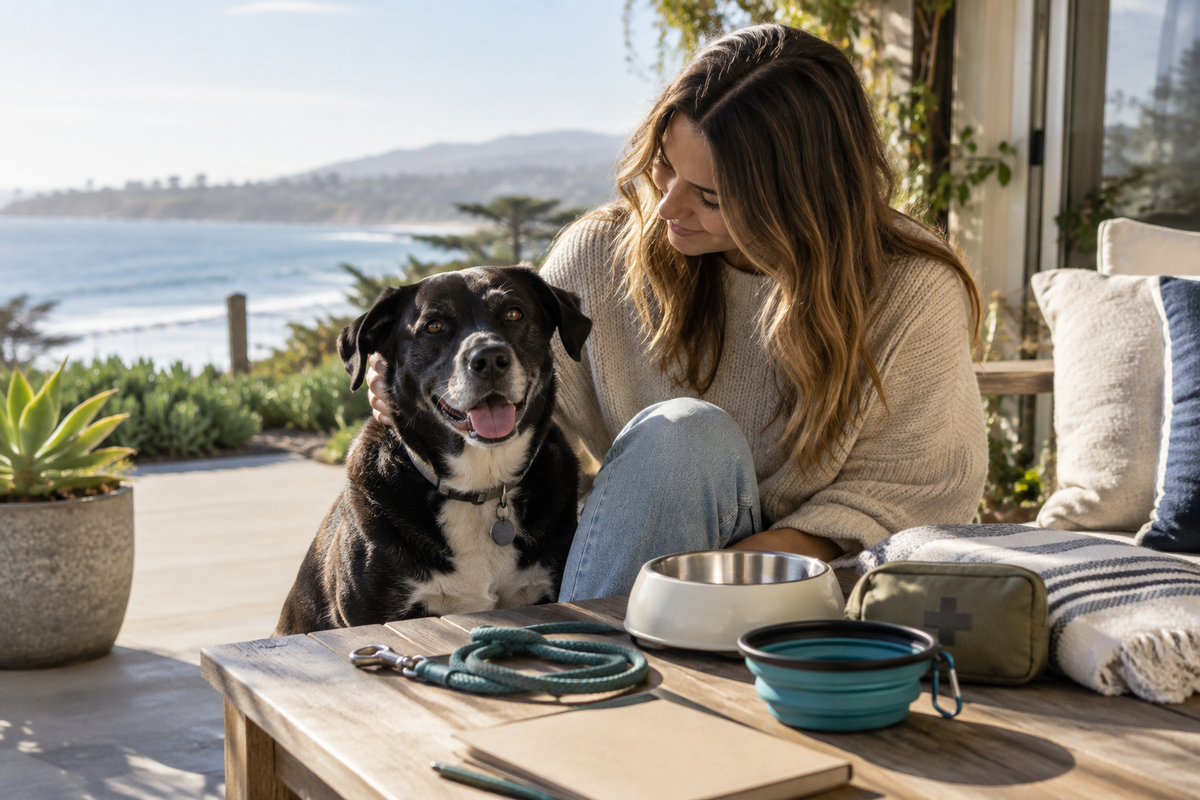
Most people preparing to adopt a dog make a shopping list.
Food. Bed. Leash. Collar. Bowls. Toys.
That list is useful. It just is not the most important one.
Before a dog comes home, build a second list: the people, places and resources you will call when ordinary life gets complicated.
That matters this week around the Bay Area and Monterey Bay. Joybound is holding free vaccine, microchip and pet-food programs in Pittsburg on September 19 while also running a series of mobile adoption events throughout Contra Costa County, including Wish Walnut Creek on September 24. SPCA Monterey County has a low-cost vaccination and free-microchip clinic in Salinas on September 18.
Those programs are not just services.
They are part of the infrastructure that helps dogs stay home.
Know where the veterinary care comes from
Do not wait for the first cough, limp or strange midnight behavior to decide who your veterinarian will be.
Before adoption day, identify a primary veterinary clinic and an emergency option. Ask about appointment availability, after-hours care, where emergencies are referred and how the practice communicates estimates and treatment choices.
AAHA specifically recommends considering hours, emergency availability, proximity, diagnostic capabilities and communication when choosing a veterinarian. It also notes that accreditation is voluntary and reflects practices that have been evaluated against veterinary-care standards.
You are not looking for the fanciest waiting room.
You are looking for a veterinary team you can actually reach and work with.
Find the lower-cost resources before money gets tight
A surprising number of pet-support programs are discovered only after somebody is already struggling.
That is backwards.
Keep a note in your phone with local vaccine clinics, microchip programs, pet-food assistance and any rescue support available in your area. If you live in Contra Costa County, Joybound’s Community Solutions programs include FoodShare and free vaccination/microchip events. Monterey County residents have access to low-cost vaccine options through SPCA Monterey County.
If your adoption organization participates in a retailer’s adopter program, ask about that too. Pet Food Express says participating rescue partners can distribute its 20/20 adoption coupon.
Saving twenty dollars here or a vaccine fee there is not the entire cost of having a dog.
But knowing where legitimate help exists can keep a temporary financial squeeze from becoming a crisis.
Do not immediately reinvent the dog’s diet
A new dog already has enough changing.
If the shelter or foster tells you what the dog has been eating successfully, write it down. Unless there is a medical reason to change immediately, continuity can make the first days simpler.
AAHA advises against frequent food changes and recommends making necessary transitions gradually to reduce digestive upset.
The cheapest bag on sale is not necessarily a bargain if the dog cannot tolerate it.
Build the budget around boring things
The glamorous part of a new dog budget gets photographed.
The boring part keeps the dog healthy.
Think beyond the adoption fee: food, parasite prevention, annual veterinary care, licensing, grooming if needed, training, boarding or pet sitting, replacement gear and unexpected medical care.
You do not need to predict every expense.
You do need a plan for expenses you cannot predict.
That might mean gradually building a dedicated pet emergency fund. It might mean researching pet insurance before a medical condition exists and understanding deductibles, reimbursements and exclusions. AAHA notes that policies vary considerably and recommends understanding coverage and exclusions before choosing one.
The point is not to make dog ownership sound frighteningly expensive.
It is to prevent the first surprise bill from being the first time anybody thinks about it.
Make a backup-human plan
There should be another person who knows the dog.
Not just someone who has met them.
Someone who knows where the food is, which veterinarian you use, what medication the dog takes, how they walk on leash and who to contact if you cannot get home.
People get sick. Flights get canceled. Cars break down. Emergencies happen.
The dog still needs dinner.
Put the backup person’s contact information in the same place as the veterinarian and emergency clinic.
Learn this dog’s exercise needs
Do not buy a lifestyle based on a breed label.
Ask the foster, shelter or rescue what they have actually observed. Does the dog settle after a moderate walk? Need lots of sniffing? Become overstimulated in busy environments? Enjoy running? Prefer short outings?
Age, health, fitness, temperament and recovery all matter.
Especially at first, there is nothing wrong with quieter walks and a little less ambition while everyone learns what normal looks like.
Register the microchip
Having a microchip implanted and having current information connected to it are two different things.
When a newly adopted dog is chipped, confirm the registration process and make sure your current phone number and address are connected to the record. Ask your veterinary team to scan the chip during a future wellness visit so you know it is readable.
This is a small administrative job with an enormous potential payoff.
If you live near the coast, build wildlife rules into the routine
California dog life comes with responsibilities beyond the end of the leash.
The Marine Mammal Center recommends keeping dogs leashed around marine mammals and maintaining at least 50 yards of distance. If a seal or sea lion appears distressed, the useful response is distance and a call to trained responders—not letting the dog investigate.
That is not a limitation on coastal life with a dog.
It is part of doing it well.
The real adoption checklist
The best preparation for a rescue dog is not a perfectly staged house.
It is knowing who your veterinarian is.
Knowing where you will go after hours.
Knowing who can care for the dog if you cannot.
Knowing where community assistance exists.
Knowing how you will absorb an unexpected expense.
Knowing that the first week does not need to be packed with adventures.
A dog does not need you to have every answer on adoption day.
It needs you to have somewhere to look when you do not.
That is the safety net.
And building it before the dog comes home may be one of the most loving pieces of preparation nobody sees.