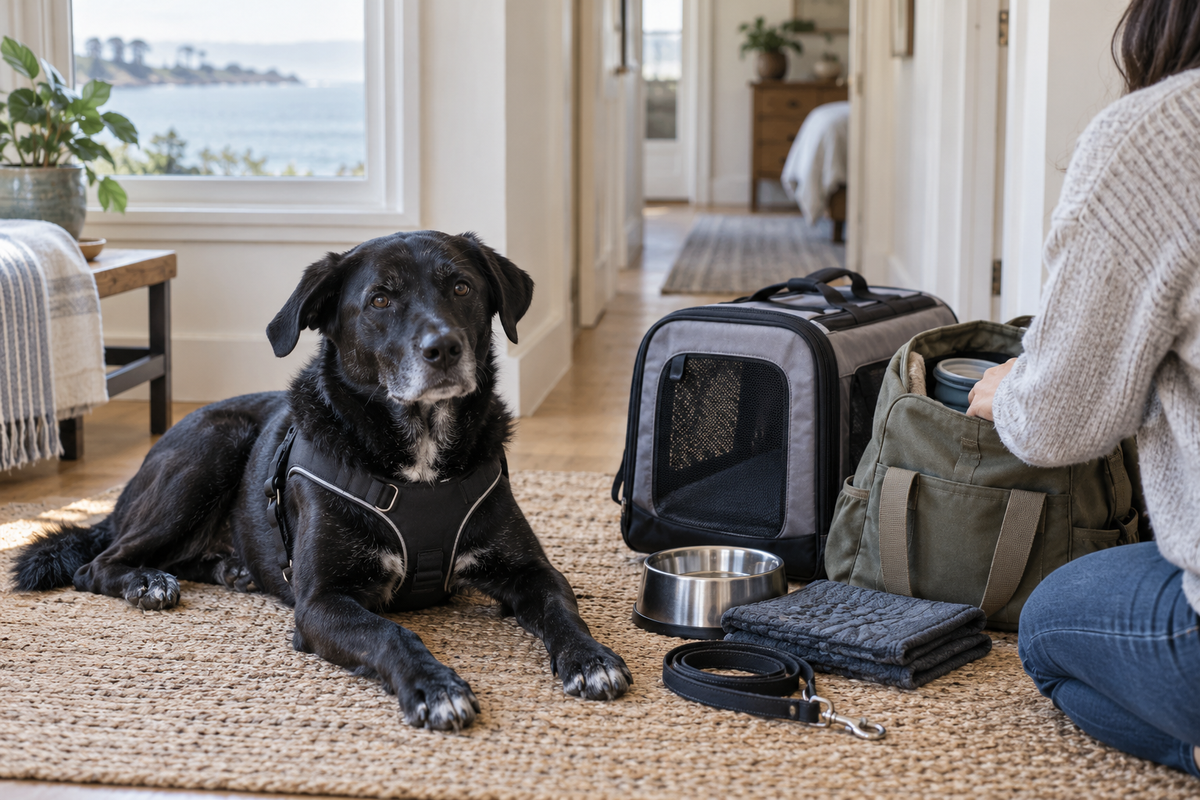
Friday’s Moss Landing flare-up is a reminder that a shelter-in-place alert can arrive before a dog household has time to improvise. Here is the quiet, practical plan to make before the next alert.
Direct answer: If officials issue a shelter-in-place order, bring your dog indoors immediately and follow local instructions about windows, doors, ventilation and movement. Settle the dog in a pet-safe interior room with a leash or carrier, water, medications and records ready, and remain there until authorities give the all-clear. If officials change the instruction to evacuation, take the dog and the prepared supplies with you.
As of Saturday morning, September 19, there is no active shelter-in-place order for Friday’s incident at the Moss Landing battery facility. Monterey County lifted the order at 4:15 p.m. Friday and reopened Dolan Road. The Monterey Bay Air Resources District posted the same all-clear. Cleanup and monitoring continue, so local alerts—not rumor or a look out the window—remain the right source for any new instruction.
What does “shelter in place” mean with a dog?
Sheltering in place means staying where you are and making that location safer while officials manage a nearby hazard. The exact steps depend on the emergency. Authorities may tell residents to close windows and doors, turn off ventilation or move to an interior room. Follow those instructions rather than applying a generic checklist to every incident.
The Centers for Disease Control and Prevention says pets should follow the same protective action as their people during a chemical emergency. Bring the dog inside early. Choose a pet-friendly interior room with few or no windows, and remove cleaners, plants, cords or small spaces that could create a second problem. Keep a labeled carrier nearby even if the dog normally walks on leash.
For broader California risks and official-alert habits, bookmark Salt Hound’s California Dog Hazard Center.
What belongs in a ten-minute dog station?
The goal is not a perfect bunker. It is a small group of essentials that can move from a closet to your safe room—or into the car—without a scavenger hunt:
- a secure leash, harness and carrier when appropriate;
- water, a bowl and familiar food;
- current medications in their original containers;
- veterinary, vaccination and microchip information;
- a recent photo of you with your dog;
- waste bags, cleanup supplies and a comfort item; and
- contact information for your veterinarian, an emergency clinic and a backup caregiver.
Ready.gov recommends a pet plan, buddy system and portable emergency kit, including identification, documents, sanitation supplies and several days of necessities. Keep the go-kit packed. During a real alert, time is better spent reading the official instruction than looking for a vaccination record.
Salt Hound’s Dog Help Desk and Dog Resource Center can help you organize reputable everyday and emergency resources before they are urgent.
What changes for an older dog?
Older dogs may need a little more setup and a little less rushing. Keep a nonslip mat, mobility aid and an easy resting surface with the emergency supplies. Write down the medication schedule and the veterinarian’s contact information; do not change or skip medication because of an alert unless the veterinary team directs you.
The American Veterinary Medical Association notes that animals with cardiovascular or respiratory disease are at greater risk from smoke, including smoke from large non-wildfire blazes. Ask your veterinarian in advance what symptoms or changes would require a call, and what the emergency plan should be for your individual dog. New breathing trouble, weakness or confusion should never be dismissed as “just aging.”
During poor air conditions, AVMA advises keeping pets indoors, closing windows and limiting outdoor time to brief bathroom breaks. During an active shelter-in-place order, however, follow the specific movement instructions from local authorities before taking a dog outside.
When should you call a veterinarian?
After smoke exposure, AVMA advises contacting a veterinarian for signs such as coughing or gagging, eye irritation, nasal discharge, unusually fast or noisy breathing, fatigue, weakness, stumbling, or reduced appetite or thirst. Difficulty breathing is an emergency: contact an emergency veterinary hospital promptly. This guidance is educational and cannot determine what is happening with an individual dog.
What if the order changes to evacuation?
Take the dog. Do not assume you will be able to return quickly. Know in advance which friend, hotel or shelter can accept pets, and arrange a backup person who can reach the dog if you cannot. SPCA Monterey County, the county’s lead animal-rescue agency during disasters, maintains a local animal disaster-preparedness guide.
Register for Monterey County emergency alerts, bookmark the air district’s current air-quality forecast, and keep the dog’s kit where every household member can find it.
Preparedness is rarely dramatic. It is a leash on the right hook, medication where it can be grabbed, a safe room already chosen and the judgment to follow the people managing the emergency. Ten quiet minutes of planning now can make the next alert much easier on both ends of the leash.
Source note: Incident status and guidance were checked September 19, 2026. Conditions and instructions can change; always use current county, fire and air-district information.