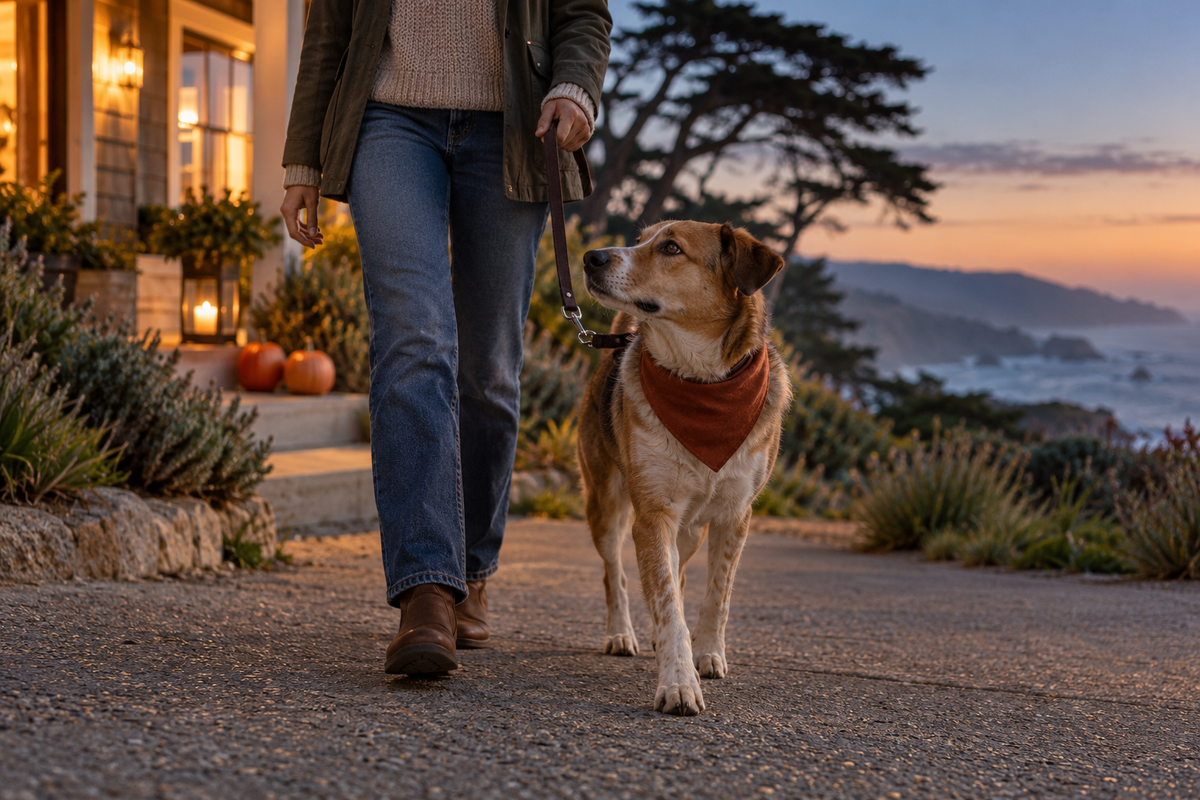
A costume and a leash are not enough. Use the organizer’s rules and your dog’s comfort—not the calendar—to decide whether a Halloween outing is a good idea.
Short answer: Take your dog to a Halloween event only when the organizer explicitly allows visitor dogs and your dog is genuinely comfortable with costumes, crowds, noise, children and unfamiliar animals. If either answer is uncertain, a secure, quiet room at home is the kinder plan. Keep all candy out of reach, and if your dog may have eaten chocolate, xylitol or another risky item, call your veterinarian, an emergency clinic or animal poison control right away.
That question is especially timely around Monterey Bay today. SPCA Monterey County is holding its annual Halloween Tricks and Treats walk-through on Saturday, October 24, from 11 a.m. to 1 p.m. at its Salinas campus. The official event page invites children and families, says costumes are optional, and offers a chance to meet adoptable pets. It does not say that visitors may bring their own dogs. That distinction matters: never assume a pet-friendly organization is running a dog-attendance event.
Does the event actually allow visitor dogs?
Check the organizer’s current page or contact the organizer before leaving home. Look for explicit language about personal dogs, leash requirements, vaccination rules, age limits and restricted areas. “Meet adoptable pets” describes animals at the event; it is not permission to arrive with yours.
If dogs are allowed, think beyond admission. Is there a fast, low-conflict exit? Will there be narrow lines, amplified sound, children in masks or food at nose level? A legal invitation does not automatically make the setting comfortable for every dog.
How do you know whether your dog is comfortable enough?
Use what you already know about your dog in busy places. A dog who avoids crowds, startles at unusual clothing, struggles around unfamiliar dogs or needs distance from children does not need Halloween exposure to “get used to it.” Choose a quieter walk at another time instead.
If you go, keep the visit short and stay attentive. Leave at the first signs that your dog needs more space—repeated attempts to retreat, a tucked posture, trembling, frantic scanning, persistent panting unrelated to heat, refusing food they normally take, or being unable to settle. Those signals are context, not a diagnosis. The goal is not to test endurance; it is to prevent a difficult situation.
What makes a dog costume safer?
A costume is optional. If your dog is relaxed wearing one, choose something light that does not restrict breathing, vision, hearing, movement or normal elimination. Remove dangling pieces that can be chewed or caught, and supervise the whole time. A simple bandana can be the complete costume.
Try the outfit at home before the event. If your dog freezes, paws at it, hides or tries to remove it, skip it. Never use dye or face paint unless a veterinarian has confirmed that the specific product is safe for that animal and use.
What Halloween items should stay out of reach?
Keep the entire candy bowl, wrappers and treat bags inaccessible. Chocolate can be toxic to dogs. Xylitol—also called birch sugar or wood sugar—can appear in sugar-free gum, mints, candy, baked goods and other human products, and the U.S. Food and Drug Administration warns that suspected ingestion requires immediate professional help. Do not wait for symptoms and do not try a home remedy unless a veterinarian or poison professional directs you.
Door traffic is another preventable risk. Use a closed interior door, baby gate or other secure barrier before trick-or-treaters arrive. Make sure your dog’s collar identification and microchip contact information are current. If a dog slips out, Salt Hound’s lost-dog emergency steps are designed for the first urgent hours.
What is the quieter alternative?
Set up a calm room before visitors arrive with water, bedding and a familiar activity. Add steady background sound if that already helps your dog. Exercise and toileting earlier in the day can reduce pressure, but do not turn the evening into a training experiment.
For more practical planning, use Salt Hound’s Life Together guide, Dog Help Desk and verified dog resources. If distress around visitors, costumes or noise is recurring, ask your veterinarian or a qualified reward-based behavior professional for guidance tailored to your dog.
Sources and freshness
Verified October 24, 2026. Local event details come from the SPCA Monterey County event page. Safety guidance was checked against the American Veterinary Medical Association’s Halloween guidance, the FDA’s xylitol warning and the ASPCA Animal Poison Control Center, whose 24-hour hotline is 888-426-4435. Event rules can change; confirm directly before traveling.