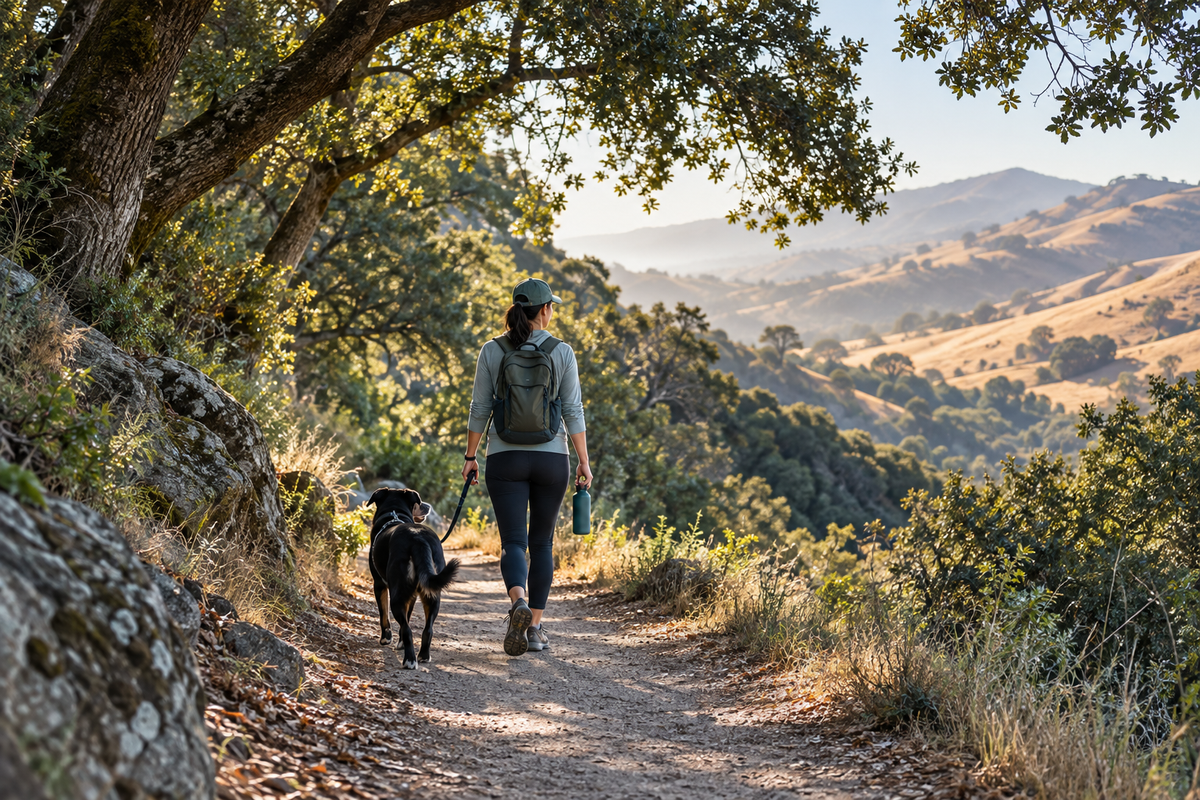
A warm inland day can begin under fog and end in the 90s. The safest walk is planned around the individual dog, the route, the surface and the chance to cool down—not one magic number on a weather app.
Direct answer: There is no single outdoor temperature that is safe for every dog. Move, shorten or skip the walk when heat, humidity, direct sun, hot surfaces, limited shade or your dog’s age, health and body type make normal cooling harder. Excessive panting or drooling, weakness, unsteadiness, abnormal gum or tongue color, confusion, vomiting, collapse or seizures require immediate veterinary attention.
That question is especially useful today. The National Weather Service forecast issued September 23 expects afternoon temperatures in the 90s across the interior Central Coast and mainly the upper 80s to around 90 in interior parts of the North, East and South Bay. Persistent onshore wind should keep the immediate coast cooler.
The contrast is the point: “California coast” is not one temperature. A walk that feels comfortable in Monterey can become a different proposition after a drive into Salinas Valley, the Santa Lucia foothills or inland Contra Costa County.
Is there one temperature that makes a dog walk unsafe?
No. Air temperature is only part of the decision.
Humidity can make cooling by panting less effective. Sun exposure, wind, pavement, sand, artificial turf, slope, duration and pace all change the workload. So do the dog’s age, conditioning, coat, weight, airway shape and medical history.
AAHA’s current heat-prevention guidance says to consider heatstroke risk when temperatures rise above 80 degrees or humidity is high. That is a prompt for caution, not a promise that anything below 80 is safe or anything above it affects every dog the same way. The American Veterinary Medical Association likewise warns that warm-weather risk can exist on days that do not feel especially hot to people.
What should change the walking plan?
Make the decision with the whole outing in mind, including the return trip.
- Surface: Asphalt, concrete, sand and artificial turf can become much hotter than the air. UC Davis advises avoiding surfaces that feel too warm to hold the back of your hand against comfortably.
- Shade and water: A route without shade, drinking water or an easy exit leaves less room to adjust.
- Effort: Hills, running, pulling, play and a long walk generate more heat than a slow bathroom break.
- Recovery: A dog that cannot settle, breathe comfortably or return toward normal after a pause should not be pushed onward.
Use the California Dog Hazard Center to check the broader risk picture, then choose a cooler hour, a shorter shaded route or indoor enrichment instead. Changing the plan is not a failed walk.
Which dogs need a wider safety margin?
Any dog can develop heat-related illness. AAHA identifies short-muzzled dogs, overweight dogs, seniors, very young animals and pets with heart, respiratory or kidney disease among those at higher risk.
For a senior dog, “we always take this walk” is not enough information. Mobility changes, chronic disease, medication and slower recovery can change what is comfortable. The Senior Dog Center offers a broader framework for adapting routines, and your veterinarian can help define precautions for the individual dog.
A newly adopted dog also deserves a conservative start. You may not yet know the dog’s conditioning, medical history or normal response to exercise. Short, quiet outings create useful information without demanding a big performance.
Which heat signs mean the walk is over?
Stop immediately if the dog shows excessive panting or drooling, marked restlessness, weakness, unsteadiness, confusion, vomiting, diarrhea, abnormal gum or tongue color, collapse or seizures. Move to a cool, shaded or air-conditioned place and contact a veterinarian or emergency veterinary hospital right away.
Do not wait for a full list of signs and do not assume rest alone will solve suspected heat illness. Follow veterinary instructions about safe cooling while traveling for care; ice or extreme cold can create additional problems.
If you are unsure whether a change is urgent, the Dog Help Desk can help organize what you are seeing and prepare a useful handoff. It does not replace veterinary care.
A two-minute plan before the leash goes on
Check the exact hour-by-hour forecast for the place you will actually walk—not only the nearest coastal city. Look at the route’s shade, surface and escape points. Carry water, decide the turnaround point before leaving and give yourself permission to substitute a short sniff walk or indoor activity.
Never leave a dog in a parked vehicle, even with the windows cracked or when the weather seems mild. Cars can heat rapidly.
The goal is not to eliminate outdoor life. It is to notice when today’s ordinary routine needs an adjustment. That small decision is part of building a good life together.
Source note: Forecast and safety guidance checked September 23, 2026. Weather conditions change; check the latest National Weather Service forecast before leaving. This article is educational and does not replace veterinary care.