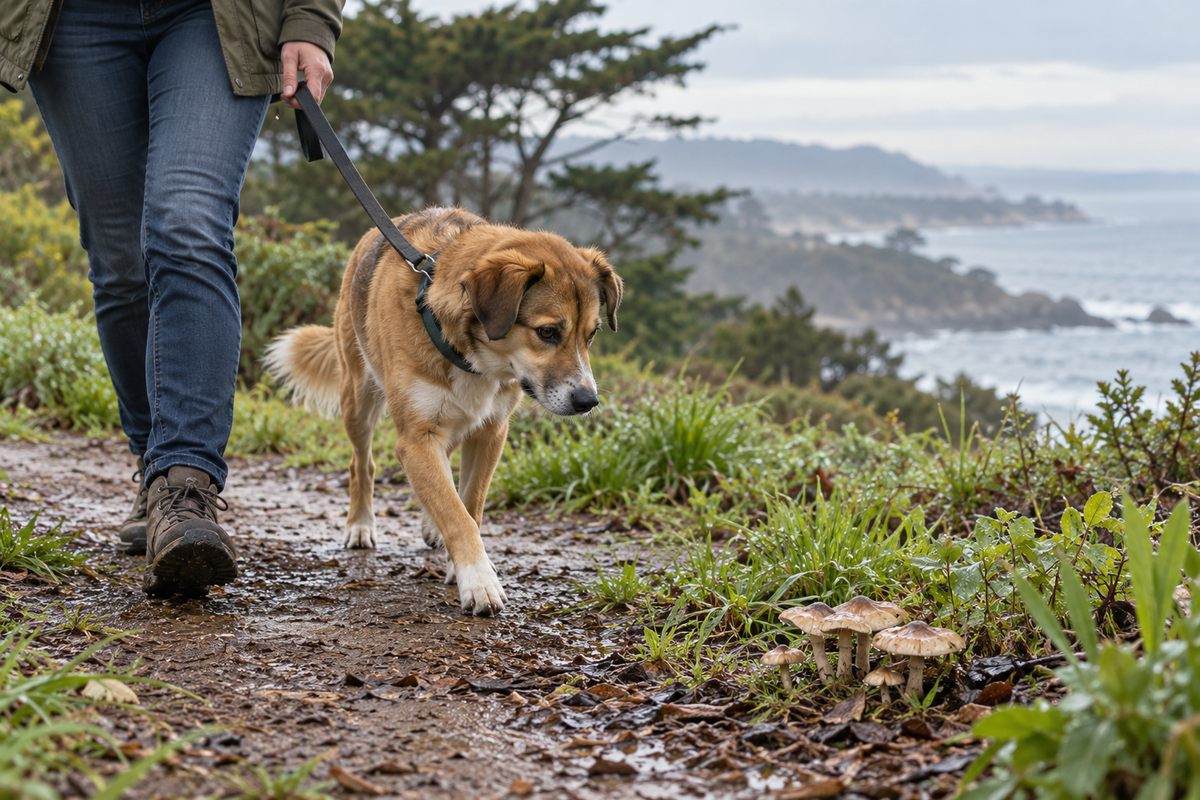
A wet Central Coast stretch makes one quiet hazard worth checking before the next yard break or trail walk.
Yes—treat any wild-mushroom ingestion as urgent. UC Davis warns that some wild mushrooms can be extremely toxic or fatal to dogs, and the dangerous species are difficult to distinguish from harmless ones. If your dog may have eaten a wild mushroom, move them away from it and call your veterinarian or an emergency veterinary hospital immediately; do not wait for symptoms.
Why this matters today: The National Weather Service forecast widespread rain across the Central Coast from Wednesday night through Thursday, October 22. The ASPCA notes that mushrooms favor warm, wet conditions and can appear quickly—sometimes overnight. That does not mean every mushroom is poisonous or that Monterey Bay is experiencing an outbreak. It means the next damp yard break or trail walk deserves a slower scan.
Why can wild mushrooms be dangerous to dogs?
Most wild mushrooms are not toxic, but appearance is not a reliable safety test. The ASPCA says toxic species can cause severe stomach upset, breathing trouble, seizures, liver or kidney damage, and death. UC Davis identifies the death cap (Amanita phalloides) as particularly dangerous and reports that it is found throughout Northern California and other locations.
The useful rule is simple: do not ask your dog—or a phone photo—to sort safe fungi from dangerous ones. UC Davis advises treating every wild mushroom a dog encounters as potentially toxic. A grocery-store mushroom dropped during dinner is a different scenario from an unidentified mushroom growing in a yard, park, or trail edge.
What should you do if your dog eats a wild mushroom?
- Prevent any more exposure. Move your dog and other pets away from the area. Note roughly when the ingestion happened and how much may be missing, but do not spend precious time trying to name the species.
- Call for professional help now. Contact your veterinarian or the nearest emergency veterinary hospital. The ASPCA Animal Poison Control Center is available 24/7 at (888) 426-4435; a consultation fee may apply.
- Bring useful evidence if it is safe. UC Davis says a piece of the mushroom can be wrapped in a damp paper towel and placed in a plastic bag for the veterinarian. Wash your hands afterward and prevent people or pets from touching the remaining growth.
- Do not improvise treatment. Do not induce vomiting, give food, or try a home remedy unless a veterinarian or poison-control professional specifically directs you. The ASPCA cautions that online guesswork can make a poisoning situation worse.
What symptoms can mushroom poisoning cause?
Possible signs include vomiting, diarrhea, drooling, changes in urination, tremors, seizures, and signs of liver or kidney injury. The exact pattern depends on the mushroom, the amount eaten, and the individual dog. Some poisons have delayed effects, so a dog acting normal immediately after exposure is not a reason to wait.
If your dog is unconscious, struggling to breathe, bleeding, or having seizures, go directly to an emergency veterinary clinic. For current Monterey Bay and East Bay emergency-hospital information, use the California Dog Guide’s verified emergency-care block and call before driving when you safely can.
How can you reduce the risk after rain?
- Walk the yard before the dog goes out, especially after a warm, wet night.
- Remove mushrooms before they become a sniffing target, keeping pets away while you work and washing your hands afterward.
- Use a leash on damp trail edges and keep a close watch on dogs that scavenge.
- Practice a reward-based “leave it” cue, but do not depend on training alone when mushrooms are within reach.
- Recheck familiar ground. Mushrooms can appear where yesterday’s route looked clear.
This is not a reason to cancel every coastal walk. It is a reason to make the first lap after rain an attentive one. The California Dog Hazard Center covers mushrooms and other changing outdoor risks, while the Dog Resource Center routes suspected poisoning and other urgent concerns without turning an emergency into a shopping path.
Sources and freshness
Verified October 21, 2026. Current weather context: National Weather Service San Francisco Bay Area/Monterey. Medical and prevention guidance: UC Davis School of Veterinary Medicine, ASPCA Poison Control mushroom guidance, and the Monterey County Health Department mushroom-poisoning page. Educational information only; it does not replace veterinary care.